Saturday, 4 June 2011

Secret embroidery


It's been asserted recently - we needn't dwell on by whom - that women's writing can be distinguished from men's after reading a single paragraph. This certainly isn't the case for me, and, as the author of a novel whose first-person narrator is a woman, I hope other readers are equally gender-blind. But there is a case, I think, for suggesting that certain kinds of art are, if not the prerogative, at least the favoured preserve of women, and that seems to me to have to do with the choice of materials. Fabrics, quilts, clothes, media that aren't just humble but pliable, soft to the touch. Oldenburg did his soft sculptures, I know, but they strike me as detumescent rather than enveloping, irremediably male in their anguish about a lost rigidity. Women artists, on the other hand, use softness in a myriad of ways, often as disturbing as the stuff they use is domestic and reassuring. Bourgeois, Messager (pictured), in the UK Lucas and Emin: these woman and others have used the scraps of fabric that surround us, from nurseries and kitchens and wardrobes and turned them into the stuff of dream, and of nightmare. There's a character in Siri Hustvedt's new novel, The Summer without Men, who does something similar. You can read my review of it here.

Monday, 30 May 2011

Hangmen and Cities of Happiness


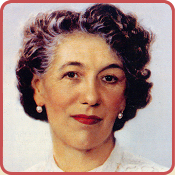
These are David Mitchell and Enid Blyton. If you'd like to know what links them, click here.

Wednesday, 11 May 2011

Wednesday, 20 April 2011

Monday, 4 April 2011

I love you past speech


This is Eros, the god of love. If you'd like to know where he hangs out, click here.

Saturday, 2 April 2011

Low Moon


This is an image of a low moon. If you'd like to know what it has to do with poetry and ghosts, click here.

Friday, 4 March 2011

Sixty Two


Somebody likes The Scent of Cinnamon very much indeed. Want to know who? Click here.

Saturday, 19 February 2011

Evil, the banality of

Not the most attractive looking man you'll ever see, but there's nothing that distinguishes him from a thousand other petty bureaucrats, the kind of people you see in offices throughout Italy, helping or hindering their fellow citizens, as the case may be. His name is Massimo Sensini and he's the elected (Northern League) mayor of a small town called Fossalta di Piave, 40 miles north of Venice and the place where Ernest Hemingway was injured during the First World War. Among its 4000 inhabitants is a four year old girl of African origin,whose father, after years of working in the local industry, was recently made redundant and is now working in Belgium, sending home what he can to support his wife and four children in Italy. The little girl goes to the local school, called 'Il Flauto Magico'. It's an all-day school and the children have their lunch there, paying a certain amount for the privilege. The little girl's mother asks for help from the local authorities to pay for her daughter's lunches (she's already paying 50 euros a month for the teaching and other services provided). But the council can't help.

The teachers at the school - there are five of them, all women - decide to forego their own lunch in turns and give it to the girl. Everything's fine until the mayor hears about it from the social services. He summons the school principal, a certain Simonetta Murri, to condemn the 'gross irregularity' of the situation and accuse the teachers, effectively, of stealing council property through their 'misuse' of lunches assigned to them, an act that incurs 'a loss of revenue for the municipality'. The principal agrees. The teachers are told that if they continue to deprive the education system of five lunches a week, they will be disciplined. The little girl now does only half a day at school, going home for lunch and staying there for the afternoon, deprived of 50 percent of an education that she, more than anyone, needs if she is to belong to the country she lives in and to which her father has contributed as a worker and tax-payer in the past.

Needless to day, according to Sensini and Murri, this has nothing to do with racism. For Sensini, the lunches are part of the teachers' salary and it is illegal to auto-reduce one's salary. For Murri, all children are equal and what would she do if all her pupils wanted free lunches? Has anyone else asked for a free lunch? Well, no, not yet. The speciousness of these arguments is self-evident, but what strikes me most about them is that these two people, insignificant in themselves yet given the kind of responsibility over others that can make lives worth living or not, are behaving in the same way as other people, in other places and at other times, whose small, considered acts of brutality, sustained by an indifferent or conniving structure of power, have led to their fellow citizens being seen as less than human. Food's such a basic need, and the act of offering it such a basic human act, enshrined in all cultures as hospitality. How ironic that notions of law and principle and equality should to be used to rip an offered plate from the small hands of a hungry child.

Dark times, dark tales

Fancy something a bit creepy for the weekend? Need some advice? Click here.

Tuesday, 15 February 2011

Saturday, 12 February 2011

Thursday, 10 February 2011

Transformations


Girls made out of flowers, brothers becoming beasts and breeding, David Beckham an object of blind irrational worship. What is the world coming to? Find out here.

And if you want to see some seriously demented whimsy, google for images of Blodeuwedd...

Wednesday, 26 January 2011

Saturday, 22 January 2011

Never Let Me Go

I've just posted a review of Ishiguro's novel (not the film, which I haven't seen, and probably won't see) over at my other blog - the serious one I save for talk about books... You can find it here. And if you haven't read the book, or seen the film, try not to think too hard about the implications of the picture on this post. I wouldn't want to spoil it for you.

Thursday, 20 January 2011

Burn book burn

The woman on the left of this photograph - the one who looks as though she's just heard someone fart - is called Elena Donazzan. She's a ferventissimo Catholic and member of Berlusconi's Freedom Party (no, that's the political party, not the ones with 14 overpaid whores dressed as nurses and a gaggle of septuagenarian cronies who ought to know better). This is a contradiction in terms that ought to exclude her a priori from holding any sort of public office, but it appears to have become a criterion for it in some parts of Italy, as though hypocrisy were no longer an inconvenient truth of politics but its essential nature. She's responsible for education in the Veneto region, a Northern League stronghold. The Northern League isn't too fond of Roberto Saviano, internationally respected author of Gomorra, possibly because he's suggested that the north, and its politicians, is not only not immune to Mafia activity but is up to its neck in it, something the south-hating trolls of the Lega would rather not hear. So it's no surprise that Saviano's work should have been removed from the library shelves of the region. After all, what are libraries for if not to propagate the dominant viewpoint?

Now Donazzan, inspired no doubt by the invigorating scent of burning paper, has issued an edict to the region's schools announcing a further round of censorship. This time it's the turn of all those authors who signed a petition in 2004 against the extradition from Brazil of Cesare Battisti, an ex-terrorist convicted in absentia and on rather dodgy grounds of terrorist activity conducted in the 1970s. These authors are referred to, with audible distaste, as intellettuali, perhaps the dirtiest word in the Lega lexicon. What's odd though is that no one has seen fit to say who these blood-stained intellectuals actually are, neither Donazzan nor the newspapers, like Repubblica, that, while deploring the edict, exercise their own inadvertent censorship. So, in case you're interested, the list includes Daniel Pennac, Luther Blissett (now Wu Ming), Massimo Carlotto and Pino Cacucci. You can find a more complete list here.

Saturday, 6 November 2010

Hello Goodbye Hello

If you visit this blog on a regular basis, you'll have had a disappointing few months, and I apologise. I've been in the UK for personal reasons that I haven't really wanted to talk about here, and the various things that so preoccupied me seem to have lost their immediate relevance. My two black beasts - Berlusconi and Ratzinger - feel far away, despite the latter's attempt to beard me in my lair this summer, and the ongoing farce of Italian politics is, well, precisely that. To my shame, I can't even summon up a more than ordinary outrage at homophobia, perhaps the result of watching programmes like Strictly Come Dancing and X Factor, where being gay sometimes seems the rule rather than exception. I've also come to hate the look of this blog, and don't like the new templates being offered (this is technical stuff - fellow bloggers will understand). SO... I'm up and off to Wordpress, where I will apply the old formula: a change is as good as a rest, and see what happens. I'll be taking all the old stuff with me, so don't despair, you'll still be able to see what I thought about Maria Vittoria Brambilla (don't care? Don't worry, you're not alone..). I've packed. I'm ready to go. From today, you'll find me here.

Wednesday, 3 November 2010

Words

If I had a thousand pounds for every time I've heard people complain that the use of the word 'gay' to describe what these same people tend to refer to as the 'homosexual life style' had deprived them of the only word available in the English language to talk about the really important things in life, like, oh I don't know, party lights, streamers, summer dresses, just general joy and loveliness, I still wouldn't have enough money to wrest the term 'tea party' back from the misinformed bigots who seriously believe their pathological state of unreason to be 'political'. This thought came to me as I sliced into a rather good cake earlier today and wished that I had a few good friends with me to share it. A tea party, I thought, how nice. How nice that would be.