OK, here goes. I’ve been fretting about this Polanski business ever since his arrest – like practically everyone else in the western world I hadn’t given it more than the occasional thought before that, which is part of what makes it all so problematic – because it is problematic, however much people would prefer it not to be. And I’ve found myself flip-flopping in line with whatever I’ve found myself reading, but not happy, or not entirely happy, or entirely not happy when Woody Allen threw his ill-advised oar in. I’ve been shocked by the details in the trial transcript, which I’m sure you’ll have read by now, perturbed by the knee-jerk support of people in the film business, perturbed, more ambiguously, by the people whose rage seems so insistent, and personal, as though they’d been drugged themselves, and sodomised (because abortion was already an issue?), and wondered, as the girl must have done at some point during what should have been a photo session (though for what? with whom?), where her mother was and why she’d been left alone with this famous, influential man, as though these people – columnists, opinion-makers, moralists - were victims themselves. As though they’d been raped themselves, and had only just remembered, because, let’s face it, every journalist in the western world has known for three decades – during which they watched The Pianist (*****) and Frantic (****) and Oliver Twist (**) - what Polanski did, and remained silent, as though the girl had never existed. This isn’t what they say now, of course. But the strange thing, when you reach the punch line of most of these intensely-written and passionate articles, is that it doesn’t seem to be about the girl at all. The people who appear to be most upset don’t put themselves in her shoes, but in those of her parents, as though the only way the abuse of a teenager can be appreciated is through the idea of one’s emotional property, one’s own child, being damaged, although this didn’t appear to be an issue at the time, to the people (person?) whose child she was. What about her? I wonder. Why can’t we ask ourselves what it might have been like to be her? Isn’t that vivid, and dreadful, enough? But the big question seems to be: How would you feel if he’d done that to your daughter? And to deal with this sense of displaced outrage these people invoke the notion of justice, that vast transparent edifice in which all deserts are just. Suddenly all their capacity for empathy, employed so liberally (if that isn’t too dirty a word) in defence of an imaginary victim’s putative parents (How would you feel...?), is replaced by the law, the law that treats all of us as one, as equals, whether we’re Nazi war criminals or their victims, or their victims’ children. Well, I can’t argue with that. That’s what law does, it’s inexorable, and indifferent, and grinds on, and so on, and we couldn’t live (safely) without it. And, of course, that’s what it ought to be doing with Polanski, and now that it is I only wonder, if perhaps it had all been a little clearer after he’d plea bargained and then run scared because it looked as though someone, a judge, was about to pull a fast one, whether it might not have been better done three decades ago, when the crime took place. Still, this is what justice does, and it does it by pretending that the state of the judicial art it applies has a kind of permanence and isn’t influenced by mood and ethical fashions, but somehow rises above all that, and is atemporal, and belongs to all of us. And as a social being, and respecter of justice, I respond to that, however much it suspends disbelief. But justice isn’t all we have. Because we know that justice may be absolute, but the truth is never that. The truth is temporal, and relative, and riddled with doubt. Maybe what our heart of hearts should be concerned with is not what justice requires, but what it must be like to be the other, to put ourselves not only in the easy, blood-stained, commodious shoes of the victim, but in the narrower, less forgiving, toe-pinching footwear of the perpetrator.
Sunday, 4 October 2009
For what it's worth


Monday, 28 September 2009
Me again
 Another self-promoting post, I'm afraid. Here's a two-page glimpse of the first number of the new Cambridge Literary Review, which not only contains this poem, written in 1973, but also a memoir of my meeting with the concrete poet Dom Sylvester Houédard, or dsh, as he preferred to be known. It's shockingly candid, as people used to say when reticence was a virtue. (Click to embiggen.)
Link 7
case, fast, light, note, refuse, row, wound
Each story centers on one of the words and also contains the other six words somewhere in the text. Clicking on any of those words in a story will take you to another random story that centers on that word.
Explore the meaning of the seven words through the stories, or click on the 'Wordia' logo at the top of a story to hear an author define the story's word on video.
Link 7 contains stories by Alan Beard, Charles Lambert, James Ross, Sarah Salway and Kay Sexton along with many others.
Saturday, 26 September 2009
Sniff, sniff
 First item on the lunchtime news programme on RAI 1 today was a hurriedly organised photo opportunity for Berlusconi and Benedict 16 at Rome's second airport. B16 said it was a 'joy' to see Berlusconi, who responded with a cheesy grin and a comment about 'racing through the air' to greet the befrocked one, as though he'd flown there under his own steam, and not in a ruinously polluting plane of the kind he normally uses to shift his harem from one villa to the next. You'd have expected B16 to follow up this greeting with a few words on his latest edict (the word bull comes to mind, although it isn't immediately associated with papal), the one about the havoc wreaked on children by divorce and extended families. I'd have thought that a fair amount of havoc had been wreaked on children by catholic priests, but that's by the by. Still, there he was, the supreme head of the catholic church and noted theologian, tête a tête with a head of state, a divorced man who's about to be divorced by his second wife for consorting with minors, a man with a family so extended its limits remain unknown, a man who apparently phoned his pimp in Bari at least ten times a day before said pimp hit fan. Which moral figurehead would miss a chance like that to set a poor erring sinner on the straight and narrow? Well, B16 for one.
 Thursday, 24 September 2009
Noblesse gets nobbled
 I wrote a short post almost two years about Italy's ex-Royals, Vittorio Emanuele di Savoia and his appalling family, when the whole ungrateful gang decided to sue the Italian state to the tune of €260 million (plus interest) for the 'moral suffering' of being obliged to live in Switzerland for 54 years. You can read it here. They withdrew their claim some months later, presumably when it was pointed out that silence is often the better part of maintaining some small scrap of dignity, despite one's best efforts to piss it away. Soon after that, the remnants of the Christian Democrat party decided to candidate the son, Emanuele Filiberto (hereinafter Fibbie), for a seat in parliament. There was an exhilarating moment during a press conference in which the party leader was caught whispering answers to a sadly confused Fibbie, who clearly hadn't expected the press to be so insolent. Earlier this year, with his budding political career already in shreds, Fibbie won Italy's version of Dancing with the Stars, a victory that strained the definition of both 'dancing' and 'stars' but let's not be churlish; at least the boy knows how to wear a tux. Next stop, Fop Idol.
Wednesday, 23 September 2009
Mind your language

Tuesday, 22 September 2009
Monday, 21 September 2009
Jobs for the boy
 Remember him? That's right, it's young Renzo Bossi, son of Umberto "Bingo Bongo" Bossi, currently minister in Papi Berlusconi's cabinet, may god preserve us. Daddy's in charge of reform, something that's sadly needed in the semi-free state of Italy, though personally I'd rather be asked to clean the Augean stables with a toothbrush. Still, you have to start somewhere, and Bossi's been a professional politician long enough (22 uninterrupted years) to have some idea of the task ahead of him. Corruption, inefficiency, collusion with organised crime. That sort of thing. The kind of thing he's been attacking from the soapbox of his state-paid salary all these years. But just in case he isn't sure where to begin - and I saw him looking fairly vacant at the state funeral of Italy's latest casualties in Afghanistan earlier today, as though he couldn't quite remember what he was doing there - I suggest he start his reform campaign by taking a look at an observatory that's just been created to keep an eye on the Milan Expo, scheduled for 2015. The event and the immense amount of money swilling round it have already attracted the attention of the Mafia, which is hardly surprising; it's a particularly succulent bone, after all, and there should be something for everyone, even after the politicians have been bought off. So it's good to know that an observatory has been created to make sure that the damage is, at the very least, limited. But wait! I speak too soon. Mr "I Have a Hard-on" Bossi has already sacrificed his own son, the fruit of his potent northern league loins and sharpest knife in the, er, cracker-barrel, vigorous young Renzo. Thrice failed at his high school diploma exams, previously unemployed, it's up to Renzo to observe Milan Expo 2015. And it's heart-warming to discover that he'll be receiving €12000 a month for his efforts. I haven't been able to find out, though, exactly what this observatory is supposed to be observing. If it's the risk of corruption, nepotism and the infiltration of half-wits in positions of responsibility, its gaze might profitably be turned upon itself.
Busy on Friday?
 There's a long post to be written about Fondi and the Mafia, so long that I haven't time to do it today. But I'll find the time, I hope, before Friday when the town will be host to a national demonstration against organised crime. As you can see from the poster on the left, some of Italy's bigger names have been invited: not just opposition leaders but people who have lost members of their family, their livelihoods, their careers and, on a daily basis, their personal safety because they, or their families, have had the courage to stand up against one of the two most powerful non-elected institutions in the country. (The other one is the Vatican.) Oddly enough, there isn't a single representative of the government among the speakers. Perhaps, in their populist way, they'll be scattered among the demonstrators taking photographs for later use (I think this is a joke). I'll be offering other possible reasons for their absence when I get round to telling you a little more about why Fondi, to its misfortune, should be the ideal place for a demonstration of this kind...
 Sunday, 20 September 2009
Now is the time to cover your face
 To what appears to be general indifference, the press room in Rome city hall has just been dedicated to Oriana Fallaci, the Italian journalist who died three years ago in Florence after having spent many years in the States. Those of you who've never glanced inside any of the last few books Fallaci wrote, in Italian and an execrable English, will have no idea of the level of irrational venom to which her anti-Islamic polemic sank. Together, they redefine the notion of racist vomit with an energy that would impress the KKK were its members capable of extended reading. They're a sort of cross between Ann Coulter at her worst and the most virulently xenophobic taxi-driver you've ever had the misfortune to be picked up by. Fallaci's no doubt sincere hatred, and self-aggrandising hate-mongering, were fuelled by the way Muslims smell (that's right - bad) to the fact that they 'breed like rats'. Heady stuff, and much of it went down a bomb - if that isn't too inflammatory a metaphor - in the new Italy, characterised by Umberto 'Bingo Bongo' Bossi, but to name a room after her in the city hall of Italy's capital is an odd choice and I'm surprised no one seems to mind. After all, the (ex-fascist) mayor's recent rubber stamping of the appointment of someone who served time for an act of right-wing political violence some decades ago has stirred up enough controversy, although it's blindingly obvious that, of the two, Fallaci is by far the more dangerous figure. The fact that she was a writer and journalist of some note, and even value, before losing her marbles a là Bardot is no excuse.
Saturday, 19 September 2009
Shut yo' mouth, Part Three
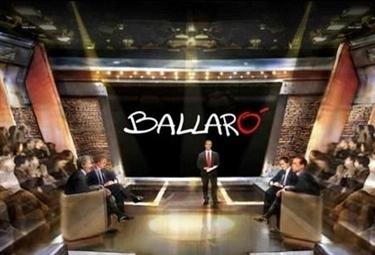 Last Tuesday evening, prime time television on the main state channel (RAI 1) was devoted to Silvio Berlusconi,as regular readers of this blog will know. Alternatives to Berlusconi - with the exception of football on Sky - were cancelled or postponed, presumably to avoid our being distracted by more enticing but less healthful products. Ballarò, for example, a current affairs programme on RAI 3, was shifted to Thursday. Matrix, on one of SB's channels, was simply gagged, because no explanation was owed to anyone except the shareholders, most of whom are family members. I didn't watch the PM's show, ostensibly intended to celebrate the success of the government's rebuilding programme to house the victims of the earthquake in Abruzzo earlier this year. I say ostensibly, because what it actually showed was four families being rehoused in prefabricated structures paid for and built by a single Italian region, without government assistance. But let's not be picky. SB chose the plates, and filled the fridges - don't ask with what - and later made use of the opportunity provided so generously by the RAI to insult his opponents - journalists, magistrates, foreigners, the opposition - with remarkable vigour for a man of his age, as though rage at the impertinence of the subject world were a sort of moral Viagra.
Monday, 14 September 2009
Information in the free world

Saturday, 12 September 2009
Allegria
 Well, Mike Bongiorno's dead. If you've never heard of him you don't live in Italy; if you do and still haven't heard of him, you were walled into a television-free zone many decades ago and have since been denied all contact with popular culture. Either way, you've missed very little. Bongiorno was poached from state tv by Berlusconi when he set up his first private channels, and worked for him uninterruptedly until last year, when his ratings fell and Papi disburdened himself of the 84-year-old hasbeen with an alacrity that surprised no one except, possibly, Bongiorno himself. During his long career, Bongiorno presented a host of quiz shows and not much else, though he'd recently acquired a pinch of semi-yoof credibility by making himself ridiculous in cellphone ads with Fiorello, Italy's current favourite showman (and a man of far greater talent than Bongiorno). He'd also reacted to his dismissal from commercial and state tv with a touching sense of hurt, which made him more likeable than he had often been on his own shows. A few months ago, he'd been picked up and dusted down by Sky, and was working on a revival of his most successful show, an Italian clone of the $64,000 Question. We'll never know how successful this might have been, but, as has been said about so many people, his unexpected death was probably a wise career move.
Idolized by millions of people, this man owes his success to the fact that from every act, from every word of the persona that he presents to the telecameras there emanates an absolute mediocrity along with [...] an immediate and spontaneous allure, which is explicable by the fact that he betrays no sign of theatrical artifice or pretence. He seems to be selling himself as precisely what he is, and what he is cannot create in a spectator, even the most ignorant, any sense of inferiority. Indeed, the spectator sees his own limitations glorified and supported by national authority.
Monday, 7 September 2009
Mud, to be worn with pride
 Last Friday, Dino Boffo, the editor of the Catholic newspaper, Avvenire, decided to resign after having been attacked and accused of hypocrisy by one of Berlusconi's house rags (Il Giornale, owned by his brother). The Vatican accused Il Giornale of an aggression it considered disgusting, vile, indefensible, etc. As did the opposition, the opposition press, and pretty much everyone not on the Grand Buffoon's payroll. Great fun, and it's hard not to be happy to see the blood flowing from Berlusconi's foot while the gun's still smoking in his hand. But hypocrisy is hardly a hanging issue in Italy. The dreadful stigma that's destroyed Boffo's career, family life, mental health, public probity, and so on, and merrily reduced him to the state of Dreyfus on his way to Devil's Island, the mud that's stuck to his face and hands and keyboard, the sin that is so beyond the pale that it can definitively shit on the man and his professional future, is not that he's a hypocrite. Good god, he worked for the Vatican! Of course, he's a hypocrite.The problem is that he's been accused of being gay. Because in liberal, 21st century Italy, being gay is THAT bad. Get used to it, boys and girls. And get used to the fact that practically no one, in all the outrage this spat produced, and with all the anathema discharged left, right and centre, had the - what shall I say? - political sensitivity to remark on this. It's no surprise that some deranged heroin addict who calls himself Svastichella (hiding behind a sheet of paper, above) should be stabbing gay men in the country's capital because he finds them upsetting, or offensive, or potentially damaging to the morals of a twelve-year-old who wasn't there.
Balconies
 One of the best things about power is that the rest of us can watch people fall from it. Ceausescu, for example. Who can forget the two-bit tyrant’s face as the crowd beneath his balcony told him, in worm-turning chorus, to fuck off? Incredulity, affront, rage, more incredulity, as though he’d been cheeked by his footman. Some days later he was strapped to a chair in a drably painted office in one of his own palaces, his wife beside him, waiting for the footman to shoot them both through the head.
 was by hubris and contempt for those who don't see things his way and, until very recently, apparently under the illusion that he no more needed to respond to his critics - other than to stigmatise them as communists and subversives - than did his Romanian predecessor. He’d jail them if he could. In the meantime, he’ll sue them into the ground.
So it's wonderful to watch him reeling from misjudgement to misjudgement like some late Rocky, the vaudeville smile increasingly manic beneath the make-up, the off-screen scowl increasingly dark. For someone who rates his grip of the situation so highly, his feeling for the consumer and their needs so unfailingly and instinctively right, he must be wondering how so much could have gone wrong so fast. He must be wondering, drifting punch-drunk from door to door, how a flirt with an attention-greedy teenager, under the conniving eye of her pandering family, could have led to this inexplicable meltdown, where nobody understands him, nobody loves him any longer, whatever the polls might say. And even the polls. From 68% to 53% in a matter of months. Et tu, Piepoli.
Of all his friends – the Vatican, the National Alliance, the Northern League - only one has turned out not to be fair-weather, and that’s the Northern League, which has less market value abroad than the Festival di Sanremo, whose patron saints are Bernard Manning and David Irving. Propped up by a gaggle of lowbrow populists who think they live in the magical land of Padania, sustained by cut-throat journalists on his family payroll and toadies on RAI tv, raging against the communist press and the lies the world, the world, THE WORLD, is telling about him, criticised by his scheming wife and ungrateful daughter, in the echoing silence of his air-brushed son, he’s moving, step by step, towards the final light.
Thursday, 3 September 2009
Ignorance


Wednesday, 2 September 2009
Go to jail. Or not.
 As a sop to the thirsty for blood electorate of the Northern League, who seem to regard anyone born south of Florence as, in the words of their noble leader Umberto Bossi, bingo bongo, the Italian government recently voted in a law that severely restricts immigration into Italy and establishes that anyone who manages nonetheless to enter the country will not simply be sent home, as was the case before the new law, but will be treated as a criminal and imprisoned. Italy's prisons were lightened of a small part of their human load by a much-criticised amnesty during the previous government, but have recently been identified - by the minister of the interior, no less - as among the most overcrowded in Europe. Still, joined-up thinking isn't necessarily integral to government, particularly when one of its components is run by a rabble-rousing zenophobe (pictured above with his intellectually challenged son, or dauphin, Renzo, as they audition for a deodorant commercial).
Saturday, 29 August 2009
Favourite things
 One of my favourite artists (and, I admit it, a very good friend) Paola Casalino will be showing some of her work at Taunton Public Library, Taunton, Somerset, from the 1st to the 12th of September. The show's entitled My Favourite Things. One of my favourite things is a painting I have of Paola's, which hangs to my right as I work (or don't work at the moment, with temperatures still in the mid-30s). I don't know if the painting on the left will be in the show or not, but I do know that whatever Paola's chosen to exhibit will be worth seeing.
 Friday, 28 August 2009
Shut yo' mouth, Part Two

Silvio Berlusconi has just taken the extraordinary step of suing Repubblica on the grounds that the ten questions the newspaper has been asking him (click to embiggen above or see here) since the Papi-and-Noemi shit hit the fan last February are 'diffamatory'. His argument, or that of his weasel-faced legal adviser, Ghedini, is that the questions are 'rhetorical' and designed 'not to obtain a response' from Berlusconi but to 'insinuate in the reader the idea that the person "interrogated" refuses to respond'.
Thursday, 27 August 2009
Shut yo' mouth
 Earlier this year Freedom House placed Italy 73rd in its liberty of the press league table, classifying the country as 'partly free', a status it shares with Turkey, Burkina Faso and Haiti. This is hardly surprising, given that 80% of the population receives its information exclusively through television, almost entirely controlled, either institutionally (RAI) or personally (Mediaset), by the prime minister, Silvio 'Papi' Berlusconi.
 Tuesday, 25 August 2009
Sometimes you can judge a book by its cover
 A fascinating interview with a great cover designer, and more, on Caustic Cover Critic, one of my favourite blogs: informative, thorughly well-researched and frequently side-splittingly funny. In this case, it's the former. The artist's name's Roxanna Bikadoroff and this wonderful cover for Flannery O'Connor's wonderful book Wise Blood is a good example of her work.
 Monday, 24 August 2009


Sunday, 23 August 2009


Friday, 14 August 2009
Attention
 I went to the Arnolfini Gallery in Bristol yesterday. I've known about the place for years, but the last time I was in Bristol, in autumn 1975, I was looking for a job and don't remember even considering the notion of a visit to an avant-garde arts space. What I remember most vividly from that visit was, first, getting involved in a brawl while looking for somewhere to sleep, something that had never happened to me before and has never happened to me since, and sweating against the plastic lining the owner of the bed and breakfast I was staying in had slipped between the bottom sheet and the mattress of my single bed. At that time,art played second fiddle to concerns as immediate as work and a place to live, however much these concerns might have fuelled my own art later. But it's a place I've been aware of, and been intrigued by, for years, so I was keen to visit. We were there just before ten, when it opens, so we sat and looked at the water in that state of contemplative alertness to small shifts in the environment that water produces. An immensely elegant, unbearably malodorous, tramp, tall, long-boned, with the bearing of a medieval hermit, approached us and asked, in passable Italian, for a cigarette - he'd presumably heard us talking between ourselves - then thanked Giuseppe for the half packet of MS he was given with a smile of great sweetness and a lilting Grazie. And then it was time to go in, and so we did.
Saturday, 8 August 2009
Ownership
Thursday, 6 August 2009
Holiday!
 I'm off on my summer hols tomorrow morning and won't be back for two whole rain-filled weeks (yes, I'm back in the United Kingdom), so try to keep your expectations low as far as my posting is concerned. This doesn't mean I won't post - I could very well produce some of my most extraordinary work - witty without being shallow, vibrant with intelligence, utterly to the point. You know, the sort of thing I turn out on an almost daily basis. It just means I may not post very much, or very regularly. Note, I say may not. As in may.
Monday, 3 August 2009
The right of the strongest

Aaah, that's better
Thursday, 30 July 2009
Summer with the Dead
Greetings from Amazon.co.uk,
As someone who has purchased or rated Dubliners by James Joyce, you might like to know that Summer with Horses (White Cloud Station) is now available. You can order yours for just £4.99 by following the link below.
 | Summer with Horses (White Cloud Station) Trudy Nicholson
| |||
 |
Product Description
Suzy, Lucy and Alexa are spending their summer holidays at the beach, enjoying the freedom of time alone with their horses. But a near tragedy involving Suzy’s beloved horse Ripple introduces a new friend into their lives and gives Suzy the opportunity to revisit White Cloud Station.
