Wednesday, 14 March 2007

Notes from WYD 2005

I wrote this soon after returning from Cologne in the summer of 2005, but now seems an appropriate time to post it:


Tram No 7 is one of four trams that cross the Rhein from Deutzer Freiheit to Heumarkt. We could just as easily walk over the bridge, but the ritual of taking public transport makes us feel we belong here, beside the late-start commuters and pensioners with their small quaint dogs. We’ve been in Cologne for over a week and feel like old hands, our change counted out for the ticket machine on board, our mood relaxed.

So we’re startled and slightly miffed when the tram arrives to find it crammed with foreign teenagers squatting in the aisles on expensive brand new backpacks, shouting from one end of the tram to the other in a babble of tongues. Bare legs, the sort of serge-like dark blue shorts favoured by scouts on hefty legs, tanned or milky pale according to ethnic group. Already they seem to have separated out, like curds from whey; Italians loud and boisterous and turning inwards to their group, Americans dour, their backpacks protected by condom-like sheaths of coloured plastic, staring across the river towards the Dom, a sprinkling of Asiatics in cowls and dog collars lending a clerical air.

It’s been raining and dozens are draped in improvised protective wrappers, often flags. One girl, dark circles round her eyes, is sitting with a supermarket bag on her head, like a cloche. The habitual passengers have the air of embattled survivors under invasion. There are bursts of song, discordant and oddly hesitant. Anthems flare up, then stutter out. The strongest smell is of damp socks.

The fifteen-, maybe sixteen-year-old girl slumped in front of the ticket machine shrugs and sighs as Giuseppe eases his hand around her to touch the screen, her backpack still over the slot for the money, one Euro thirty. He asks her to move, politely, in English. She flounces to one side, the expression on her face a textbook example of Milanese affront. Un attimo, she snaps, and I watch Giuseppe resist the temptation to answer back in Italian as he feeds the appropriate coins into the slot. Thank you, he says, which seems to irritate her all the more, as he intends. By the time we have our tickets it’s time to get off.

Our house swap was arranged six months before we discovered that World Youth Day 2005 would be held in Cologne, and we couldn’t back out. We overlap with the event by two days, returning to Rome the morning Pope Benedict XVI arrives, our planes within spitting distance of each other somewhere above the Alps. An unwilling, often enraged, witness to WYD 2000 in Rome, I prefer to see the coincidence as just that, as bad luck; talk of fate plays too neatly into the hands of the people all round us, whom we’re supposed to call pilgrims I discover from the scrolling message on the bus stop at Heumarkt. Pilgrims. Pilgerin. Pellegrini. Pèlerins.

Special passes for public transport have been provided, so there’s no excuse for their grabbing a free ride, unless they only speak Japanese, which doesn’t appear on the scroll. I still feel that we’ve been followed though, despite myself. I wonder how many of the kids on the No. 7 have their pilgrim passes as they bustle across the street, the traffic light still red, the first shrill notes of something rousing on their lips, while the people of Cologne, obediently waiting for the bitte warten sign to change, just stand and watch.

Up to this morning, Cologne has been low key, as though nobody much cares about Ratzinger’s homecoming, trailing glory, about to become B16 just as his predecessor has been apostrophised to JP2. At WYD, acronyms rule. There are house-sized photographs of the two of them on the building diametrically opposite the cathedral, placed so that neither can see the other, nor anything else, their eyes aimed firmly horizonwards. Apart from that, and an iconoclastic Warholian portrait of the new pontiff in a nearby restaurant (see an earlier post), the city appears indifferent.

The porn shops, I discover later, are supposed to have cleaned up their windows, but Erotik für Damen still has an impressive display of double-headed dildos and pussy ticklers, while its neighbour flaunts a selection of studded cache-sexes alongside one with elephant ears and trunk in scarlet satin. There’s even a blow-up three-holed lovely in one shop made from the same pink plastic as the inflatable giant hands group leaders are holding above their heads to guide their flocks towards the cathedral.

The hands are the tip of the gadget iceberg, I discover. Apart from the T-shirts and baseball caps, registered pilgrims receive the official pilgrim package, containing a backpack with the WYD logo, refillable plastic bottle and biodegradable cutlery (15 Euro). Other merchandise includes candles of various dimensions, a silicon case for cell phones, lip balm and a chronograph with the legend Tempus fugit.

One of the items on the website is a technical description of the Popemobile. It has a getaway speed of 80 mph, just in case the armoured body isn’t enough. Inside, the footrest can be moved electronically. The organisers use the word pilgrim, but I’m not convinced. They’ve been flown and bussed here by the church’s travel agencies, with insurance against accident and theft included in the deal. They haven’t suffered. Their jeans are ironed. Their lunches packed.

A dozen French kids huddle round a stand of public telephones to call their homes. Individually, they look untried, untested, as though they’d been beamed down from the mother ship for some sort of initiation. They might be the vanguard of an invading force, or sacrificial lambs. It’s all a question of numbers, which must be why they move in anxious packs behind their flags and blow-up hands. It shouldn’t matter, but I’m struck by how many of them look like the kind of teenagers who get beaten up and bullied: overweight, nerdish, spot-disguising cream caked on their cheeks, unfashionable hair cuts. Wholesome, certainly. But wholesome multiplied by half a million turns into something else, uncontrollable and rather sinister.

When one pack passes another, there’s a surge of antagonistic pride and flag-waving, the equivalent of youths pushing each other to see how far they can go. The rest of us, lay tourists, citizens, don’t count. A small screaming woman in a black suit, carrying a briefcase, struggles to cross the Altermarkt, her voice distorted by exasperated rage, but nobody shifts their backpack or draws in their feet to let her pass. The Ludwig Museum foyer is filled with bivouacking youth but the only pilgrims prepared to buy tickets seem to be Americans, a group of whom use an installation of Patti Smith videos to improvise a picnic until they’re moved on by a visibly shocked custodian in his late fifties.

A show called Naked Drawings, political graffiti-like doodles by the Romanian artist Dan Perjovschi covering the walls of a high-ceilinged white room (see an earlier post), attracts larger numbers, though what they make of his telegraphically astute comments on terrorism and global warming is hard to say. The twin-spired profile of the Dom runs through the drawings like a leitmotiv. In one sketch, the tower on the right says ‘I’m tired’ and the one on the left replies ‘Me too’, which neatly undercuts the aggressive-triumphal mood outside. In another, a man in a turban is standing alone in the centre of a tramcar, with the other passengers crushed at each end in their effort to avoid him.

In Peters Brauhaus our final evening, the waiter delivers another round of beers and schnapps to the next table, thirteen men and one woman speaking Canadian English. Their voices rise in the flow and warmth of alcohol and it isn’t difficult to overhear talk of community and Father Brice, who couldn’t come. The waiter’s a friend of ours by now. He downs a glass of the local Kölsch in one and confesses that the train ride to work was hell, too many people, too many pilgrims. ‘I think you are here for the Pope,’ he says, ‘but then you tell me you come from Rome and I think, no way.’ He smiles and clinks his empty glass against our almost full ones.

Crossing the bridge on foot, we watch a tram go past, flushed faces squashed against the glass. The Dom behind us is lit unearthly blue, the Romanesque apse of Saint Martin a warmer honey-coloured ochre. Beyond the railway bridge, one side of the building that houses the regional government is covered by part of the WYD logo, a swoosh of yellow, a star, suitably ecumenical. Halfway across the Rhine, we come up against the last few flag-bearing ragtag bands, all male by now, laddish as religious sentiment morphs into testosterone, and it could be anywhere, any provincial city after the match. They might as well be singing We Are the Champions, I think, and, as if on cue, some of them do. They’re primed for the Big Day, oiled up for some chance encounter. They’re up for it, whatever it is.

The sales of condoms in Rome rose by 30 percent during the 2000 edition; it may be only an urban myth that three tons of them (used) were collected after the Pope’s sermon, but I doubt it. I shouldn’t, I know, but I think of men the same age as these in Srebrenica and a hundred other places, this century and last. I think of them moving through Berlin, victorious, with everything allowed. And I’m anxious as I always am when faced by mobs. I unlink my arm from Giuseppe’s and move an inch or two away.

Grace... to be born and live...

Jane just sent me this photograph of a protest in Dalston Lane, in London, about houses and shops being demolished for some brand new city type development and it made me think of Grace Paley, who would no doubt be angry about such a thing.

So I looked out an interview with her, by A.M. Homes, that's a pleasure and an education to read.

The title to this post, by the way, comes from a Frank O'Hara poem, and continues... 'as variously as possible.' There can't be two writers whose lives are less similar than those of Paley and O'Hara. But I like to think that O'Hara would have endorsed wholeheartedly Paley's claim: All my habits are bad.

Chancelucky: I'll take the Constitution for a Thousand Alex (Jeopardy American Style)

Meanwhile, in another country....

Chancelucky: I'll take the Constitution for a Thousand Alex (Jeopardy American Style)

Natural law for beginners (and pontiffs)

Perhaps someone can explain to me exactly what the connection is between 'natural law' and a legal provision to enable someone to continue to live in his/her home after the death of his/her partner? Or to visit that partner in hospital? Or to have time off from work to look after him/her at home? Aren't these things not simply 'human rights', but common decency? Not according to the pope, they're not.

As Jeremy Bentham said: people invoke Natural Law when they wish to get their way without having to argue for it.

'Natural law' is a cultural construct, honey. Even in Latin. Live with it.

Pontification

A clique of sex-obsessed old men in the Vatican continues its offensive against civil union legislation (read DICO) by stigmatising the demonstration last Saturday in Piazza Farnese as carnivalesque, hysterical, a masquerade and so on. As one who was there, I can tell them this simply isn't true, that the event was almost depressingly sober.

But--as is the case with most phobics--the truth doesn't seem to be what concerns them. Once again, ignoring the scope and purpose of the proposed legislation, that of ensuring a measure of economic security to couples bound by affection, regardless of sex and sexual orientation, l'Osservatore Romano (the Vatican house organ) accuses the demonstration of two cardinal sins: a lack of respect, and an inappropriate use of children.

It's both arrogant and mendacious to expect people who are constantly insulted, demeaned and denigrated to show respect for their denigrators. Respect is mutual, or not at all. And the casuistic papal tosh that the homosexual is worthy of respect as an individual but not as someone capable of giving and receiving love (and, yes, that includes sex) is the kind of nonsense it can apply to its own members if it wants, although it's signally failed to convince a significant number of priests, bishops, cardinals and even, dare I say it, pontiffs of this. But it certainly has no right to extend its magister to the rest of the population.

Besides, if a couple of papal hats made out of cardboard are all it takes to make a carnival, what on earth is the real thing supposed to be? And if a slogan saying the Devil wears Prada is so deeply offensive to Ratzinger why doesn't he think a little harder about the appropriacy of wearing designer clobber and rattling on about poverty? Presumably for the same reason he presides over an ostensibly celibate institution and 'defends the family' as natural law.

The presence of children at the demo appears to have been particularly galling to pontifical sensibilities. It's becoming increasingly clear that what perturbs Ratzinger et al. isn't the fact that gays are 'constitutionally sterile' (as Berlusconi's tart, Mara Carfagna, says), but that we're the opposite. We can have children! And we do! It's our sexual potency that's so disturbing. And the comments made yesterday by the Minister for the Family (and co-author of the draft bill), Rosy Bindi, to the effect that gay men and lesbians 'can forget children', is in line with this fear. But what on earth does she mean? That the law will annul the desire for maternity and paternity? That we'll have to be sterilised in order to share a pension? As a celibate herself, she clearly needs to learn a little about human ingenuity. If gays want kids, they'll have them. And if the law makes life difficult for gay couples and their children, it's the children who'll suffer. Is this what Bindi wants? Apparently yes. In a remark which appals on so many levels it's hard to know where to begin, she announced that it's better to leave a child in Africa, with its tribe (!), than to allow its adoption by a gay couple. Has she told Madonna? But that's OK. Millionaire absentee mothers and their male bitches (sorry, Guy!) are perfectly acceptable parents for African children...

Tuesday, 13 March 2007

Credit where credit's due

My first class after ten months away. I explain what the course involves. I tell them what they'll be learning and how we'll be doing it and what book we'll be using, I give them the usual pep talk, making them feel good about they already know, excited about what they'll know in ten weeks' time. I'm funny, I'm warm, I'm encouraging, I'm student-friendly. I'm hot shit. This is what teaching is all about, I think.

Finally, I ask them if they have any questions. A hand shoots up.

'What happens if I fail the exam? How many credits will I get?'

Dispirited? Yes.

Sunday, 11 March 2007

Reasons to be cheerful, if you're Peter Kay

This article will probably have been blogged by just about every struggling writer in the English-speaking world. So why should I be left out? Sob.

Any ideas who 'Jane' might be?

Better a queer citizen than a paedophile priest


The most provocative placard at yesterday's DICO event was probably this one. But look at the man's face. Could anything be sweeter?

A spotted dog

This dog was seen in London by Jane, hanging around outside a shop (the dog, not Jane) and its stance has that mixture of curiosity and patience that I love so much in dogs, a sort of brinkmanship they do even better than children, who tend to cross thresholds the minute they're not being watched; so I wanted to share it.

It's also here to make up for the fact that I didn't get a decent photograph of any of the many dogs that contributed so much to yesterday's demonstration. Let this one be their representative.

DICO day: impressions

The day after, there's the usual war of numbers: 20,000 according to the police, 80,000 for the organisers; La Repubblica's settled on 50,000. Whoever may be right (and I'd go with La Repubblica), Piazza Farnese was jammed with adults, children, dogs taking part in the protest in favour of civil unions, currently under attack from the centre-right, the Vatican and elements within the cnetre-left government, notably the Minister of Justice, Clemente Mastella (whose party polled 1.4% of votes in the last election), and Opus Dei member Paola Binetti, centre-left senator and, god help us, psychiatrist, who recently announced that homosexuality was deviant behaviour (and who is also known as a self-flagellant). The mood was contained, static, even dull; certainly not festive, despite the presence of a score or so of rainbow banners. A stall was selling the usual T-shirts, with Che Guevara, surely no homophile, prominent among them. Most of the flags belonged to political factions within the governing coalition (the Rose in the Fist, Rifondazione Comunista, the Greens), although several handwritten banners showed a camper, less party aligned spirit.

We were there to tell the government that civil unions are still on the agenda, whatever the Vatican and Andreotti might think, and three government ministers were there to tell us how right we were, although the promised presence of some centre-right representatives remained unfulfilled. It's obviously a cross-party issue, though, and it will be interesting to see how people vote when a bill of some sort reaches parliament. Cecchi Paone, television presenter and Forza Italia MP, apparently had a hissy fit and left the stage, but this was set so low only a privileged few could see it. There were very few police and some of those present were parked as usual outside the home of Cesare Previti, corrupter of judges and Berlusconi sidekick; the scaffolding against his building had the largest banner of the day, announcing Io DICO Zapatero! The Spanish PM was definitely the event's patron saint, and placards to his sanctity were scattered throughout the crowd.

There were none of the usual leather chaps framing bare bums, disco bunnies and male-on-male snogging that, for better or worse, tend to characterise gay protests, though I did see one couple of youngish men share a fairly chaste kiss. This was only fitting. After all, the law--if it ever exists--won't only protect gay couples, as civil partnerships do in the UK, but any two people bound by 'affective ties'. Even the highly-publicised wake-up alarm, which went off at six with the help of clocks, mobiles, etc, felt angry rather than shrill.

The only sour note occurred later, as Peppe and I walked through the centre of Rome. We were just past the Pantheon when we heard a waiter announce to no one in particular that Rome was full of queers. And today, there's news of the arrest of the latest Rumanian rentboy-cum-murderer, obliged to kill a man forty years older than he is to protect his honour. Business as usual in the shadow of the Vatican.

Friday, 9 March 2007

When your cavity needs a little filling

The dentist's chair is often a locus for sexual fantasies but I've never seen the notion expressed quite as blatantly as it is in this sign, spotted in Kingsland High Road and snapped by Jane.

And if you think the title to this post is gratuitous vulgarity (as of course it is), let me hastily refer you to its onlie begetter, Bette Midler, who wrote and performed the song it comes from: Long John Blues.

Thursday, 8 March 2007

A very few inches of theatrical criticism

Ostensibly reviewing Equus, the Evening Standard’s Nicholas de Jongh commented: “Never in modern times has such excitement been stirred by the prospect of viewing a very few inches of adolescent male flesh.”

Judging from his authoritative tone, De Jongh is an expert on the excitement to be derived from adolescent male flesh. All well and good: specialised sites, of which De Jongh is no doubt aware, have already dedicated a fair amount of space to Radcliffe's physique, photoshopped and otherwise. But I fail to see what this expertise has to do with the business in hand: that of reviewing the play.

And I certainly don't see the need to mention the length, or lack of it, of Radcliffe's 'male flesh' (a direct quote from Teleny)? After all, there's no mention in the review of Jenny Agutter's bra cup size, surely also of interest to London theatregoers?

Where are you, Kevin McCarthy, when we need you?

Flying back from London on Ryanair this morning I noticed that three members of the cabin crew had identical blemishes on the back of their necks. Naturally, I thought of Invasion of the Body Snatchers.

Is this an isolated case? Or has anyone else noticed the tell-tale sign of alien occupation on no-frills airlines?

Tuesday, 6 March 2007

Air guitar? Air head?

You many have seen a photograph of Tony Blair, taken during his time at Oxford. Most commentators have focused on the gesture he's making with his right hand, offering a variety of interpretations, from the vulgar (masturbation) to the pathetic (air plectrum).
But nobody seems to have remarked on the look of utter open-mouthed vacuity and, surely, smugness on his face.

Has it ever been slapped? If not, why not?

Saturday, 3 March 2007

The natural order

Two friends and colleagues (lettori: if you don’t know what they are click on the label below) were summoned a few days ago to the office of a professor in their faculty, head of department and died-in-the-wool barone (ditto).

He showed them a 60-page wodge of text and tables and said that he needed the English translation within a week. You can share it out among yourselves, he added, with unexpected munificence. My colleagues glanced at each other, surprised. And with reason. This isn’t the place to provide a detailed job description of a lettore post, so I’ll simply say that the translation of university documents at the drop of a hat isn’t included.

One of my colleagues pointed out that each page would take at least an hour and a half and asked if the time they spent on the work, assuming they agreed to do it, would be taken out of their annual tot of hours. Barone bristled. I’m sorry? he said, looking up. Otherwise, how would we be paid? I beg your pardon? he said.

My other colleague, in her turn, pointed out that teaching was starting this week, so that, in any case, they would have no time. I also teach, said Barone. Yes, but not quite as much as we do, my colleague reminded him. (The ratio is something like 1:6, entirely in Barone’s favour.) She might as well have added, And nowhere near as well.

Deeply offended by such insolence, Barone swept them from his room. If you aren’t prepared to do it, he announced, I’ll find someone else. Rome is full of English people. His last words, as he closed the door in their faces with that subtle irony only years of professorship can forge, were: Grazie per la preziosa collaborazione.

They behave like this because they’ve been allowed to. Italian universities work on a fagging system Flashman would have recognised immediately. It’s perfectly normal for people to work for nothing for years: typing, baby-sitting, writing humdrum pseudo-research for non-peer-assessed publication and seeing their own names appear behind their sponsors, who’ve glanced at the paper once, if that.

Finally, their spirits broken, the first few crumbs are thrown their way (a doctorate, some contract teaching, an unpaid place on an exam commission) and the rise begins. No more toast-making at dawn, no more shoe-polishing. Research! They’re still expected to earn their keep, of course, but at least they’re being paid. At least they have tenure. And look, beneath them, a lower order of creature awaits to ease their load.

Our problem, as lettori, is that we don’t perceive ourselves as a lower order. We see ourselves as equals (and often, with justification, betters). They see us as serfs. It’s a cultural problem (which means it’s also, implicitly, racist) of incommensurability and I don’t see any way round it.

Oh yes, the document they were told to translate contained evaluations of the teaching staff (a category from which we’re officially excluded), conducted, apparently, by themselves.

This is how Italian structures do accountability. (Otherwise known as trasparenza.) Aaahh.

Art-lovers near Chard...


...should make an effort to see this exhibition, by Paola Casalino, a friend and a gentlewoman. It's at The Gallery at Hooked on Books, 6a Holyrood Street, Chard TA20 2AH. From 2 to 24 March.

There's also a private viewing on 11 March (Sunday) from 12 to 2pm. Tell her I sent you.

Wednesday, 28 February 2007

The medium is the message

If this is true, my blog is sending out a message I'm not quite sure I want. I've noticed (don't ask) that this rather stylish pastels on black effect is much favoured by gay porn blogs. You know the sort of thing I mean. In fact, gay porn blogs use minima dark (as it's known) almost exclusively.

I don't know what to do. It's a bit like discovering that a perfectly harmless handkerchief hanging from the pocket actually means I'm up for group coprophilia.

I may go bland and serious and opt for the white version.

Tuesday, 27 February 2007

Work avoidance strategy No.1


As if Dan Quayle and Arnold Schwarzenegger weren't bad enough, the next two look-alikes on the list were Tony Blair and Dick Cheney (thankfully excluded by the program from my fetching collage).

This is worse than discovering you share 80% of your DNA with the earthworm.

On second thoughts, maybe it isn't.

A hand for the lady

Kate Phillips, charity director, is suing Tate Modern because she claims to have 'broken' her hand while hurtling down one of Carsten Holler's tubes, presumably of her own volition. (Details here.)

What on earth did she think she was doing? Watching television? Eating tofu salad in the safety of her own kitchen?

I wonder which charity she works for. Suggestions welcome.

Monday, 26 February 2007

The tyranny of conscience

Umberto Galimberti has an interesting piece in today's Repubblica, which unfortunately doesn't seem to appear on the paper's website. He talks about the way people claim to be unable to do certain things or behave in a certain way because it would go against their conscience. The cases he mentions are Italian, and recent, but the issues his argument touches on - euthanasia, abortion, civil unions - reach far beyond a single country and time. I'll translate a bit for you. (I hate translating, so I hope you appreciate the sacrifice I'm making on your behalf.)

So what is this 'conscience'? It is the tyranny of the principle of subjectivity that refuses to accept any form of collective responsibility and the consequences that derive from it. The doctor who, as a "conscientious objector" refuses to perform an abortion on a woman living in absolute poverty with too many children already, on a barely pubescent child, on someone whose foetus is deformed, refuses to take responsibility for the condition of the mother and the future unhappiness of the child, considering nothing but his principles, which allow him to feel comfortable with his 'conscience', precisely because they suppress, deny, refuse to see the consequences of his decision. [...]

If the tyranny of the subjective 'conscience', which in the name of its own principles is incapable of mediation and takes no responsibility for social issues (such as civil unions and the right to die), becomes an absolute principle in politics, [...] we need to make it very clear that those who bow to this tyranny have no place in politics, because their conscience ignores collective responsibility in favour of individual principles.

The essence of politics is 'mediation', not 'bearing witness'. There are other more appropriate places, such as one's private life, in which to 'bear witness'. [...] As Kant said: 'Morality is made for man, not man for morality'. This is even truer of ideology.

Crikey, Kant. Twice in one day.


Unsynthesised manifold

And while we're reading Greer, just a reminder of the time she was knuckle-rapped by some Plain English people about her use of the term unsynthesised manifold and responded splendidly. I admit that I didn't know the term myself, which rather belies her optimism about reasonably educated Guardian readers. She says:

Most reasonably educated Guardian readers would, I faintly hope, have recognised the phrase "unsynthesised manifold" as an English version of a basic concept in Immanuel Kant's Critique of Judgment, first published in English in 1790 and familiarised in Britain by the work of Coleridge and just about anybody else who writes about aesthetic theory.
And if you're as disappointingly - and, I faintly hope,untypically - ignorant as I am, here's her definition of the phrase:

The "unsynthesised manifold" is, in the original sense, everything that is out there, regardless of whether we perceive it or not. As we can't sensibly talk about matters of which we are unaware, we can use the expression more usefully to describe the endless flood of undifferentiated sensory data we accumulate throughout our waking hours. Our conscious and subconscious attempts at organising this stuff and getting it to make a kind of sense are attempts at synthesis. Because of the way the brain routinely edits and translates the raw data, what we perceive is not reality itself but a model of reality as encoded by our individual software, even before we start trying consciously to make sense of it. Most of what we perceive evades conceptualisation, and is neither dreamed nor recollected, though sometimes we can fish it out under hypnosis.

So now we know.

Shit. Piss. Sperm. Gilbert. George.

Germaine Greer has a fascinating take on Gilbert and George in today's Guardian. The article is, I think rightly, less than warm about the work, which she seems to find as pompous, vacuous and posturing as I do. She has some sharp and entertaining things to say about the devotion with which women visitors gaze on a world in which they simply don't exist.

But what she's really interested in is the way the work reveals the mechanism that's enabled the couple's survival: the annihilation of Gilbert. After having
said that 'this couple, like every other devoted couple, amounts to less than the sum of its parts' (hmm), in the final paragraph, she comments:

Gilbert and George do not answer when asked if they are lovers; they might as sensibly be asked if they are haters, for they are everything to each other. What their art says about coupledom is terrifying, for the suggestion that Gilbert has been annihilated is derived from the work itself. Gilbert is the tentative one whose eyes are most often cast down or up, evading the viewer's gaze. George wears glittering glasses; Gilbert seems blind as a mole.

Saturday, 24 February 2007

New Red Brigades arrests shake Italy


Seriously, does anyone know where this comes from (other than Perez Hilton's blog - spot the tell-tale trail...)?

Publishing

I've just read a very interesting post in the Tart of Fiction blog, about the difficulties of being published. I left this comment:

I sent my first novel cold to publishers around 15 years ago. (It never even occurred to me to find an agent in those days.) The first sent it back in a matter of days (four!), the second kept it for 18 months before admitting that the paperback division wasn't interested. The editor who wanted it, Neil Belton, suggested I get in touch with an agent. I did.

I was taken on, presumably on Belton's recommendation. By this time, I'd written another novel and she tried to sell that one, without success. We parted company. Novels three and four were circulated to agents, once more without success (nibbles but no bites), and it wasn't until two friends of mine who knew agents effectively introduced me that things changed. Both of them offered to represent me!

I made a choice, the wrong one as things turned out (for reasons I won't go into here), and another novel did the rounds without being bought. Humbly, I went to the agent I'd previously turned down, and she agreed to take me on. Eighteen months and what must have been thirty or forty rejections (for its quietness) later, she sold novel No. 5 to Picador. It's coming out in spring 2008.

The lessons? I'm not sure. The first is that I was picked out of a slush pile all those years ago and came damned close to being bought. So it can, or could, happen. The second is that the wrong agent is less than useless and the right one worth her weight in gold. The third is that no book will get published until it falls into the hands of the right editor. In my case, she'd turned the book down a year earlier and then, because she found herself thinking about it at odd moments, asked to see it again before making an offer. If the book had reached her without mediation, maybe she would still have bought it. But do books reach senior editors without mediation? I doubt it.

Interestingly, the whole commercial issue has only come to the forefront now, as we decide on the title and cover. My title - a quote from Shakespeare - was considered too quiet, apparently the biggest sin in mainstream publishing, and we've finally found an alternative with more zing that pleases us all sufficiently and has won the approval of the sales people. Now we have to decide on a cover! These, of course, are peripheral issues to the book itself.

Perhaps the most important lesson, to me at least, is that I kept writing.

John Cale: the definitive Hallelujah

No success like failure

I was surprised recently when the name of a friend of mine came up in a conversation I was having with someone who works in the media, younger than me, finger on the zeitgeist: let's call him J. I met the friend who was mentioned at university and last year, after more than 25 years, we made contact and found that our friendship was, against all odds, intact. In those 25 years, I've done what I've done, working abroad, writing and so on, and my friend has become a household name in Britain, much loved and suitably rewarded (You know who you are!) for his work in television and theatre.

And what did J. say? That it was odd to see how two people could start off equal and yet one of them should become so successful and the other should end up a... At this point his voice trailed away but it was fairly clear that the word he wasn't prepared to utter in my presence was 'failure'.

And I started to look at my life and my friend's, and weigh them against each other.
We've both done pretty much what we've wanted to do in our lives. We both have relationships that are strong and have lasted for over 20 years. He has children and I don't, but J. didn't know that. We've both achieved recognition for our work (though mine has come much more recently, and to a far more modest degree). We're both surrounded by friends. We both have houses we love and are proud of. We both have dogs... I could go on.

In fact, the only significant differences are two. Money and fame.

So why was I so surprised?

BEATING TIME

Another poem from the collection entitled VALUE. Once again, it seems like the work of a slightly deranged person I'm not sure I'd want to know, though some of the cultural references still mean something to me. Translate 'the new thingliness' into German and you should be able to track down the identity of Rasha, the black dove. Oh yes. The River Manifold, for much of its length, flows underwater.

BEATING TIME
‘The conscience is to you as what is known,
The unknowable gets to be known.
Familiar things seem a long way off.’

John Ashbery

1
Fool music from a country station
and the murdering king is accomplished out of clay
as the granite slopes wear woven caps.

He borrows a voice from the clack of iguanas,
he swallows a compass, he paces the carpet,
recoils from his maker into the head

of a Chinese dragon. It is there he can breathe.
Don’t scald his porcelain lungs with blue.

Crossfire. Blockades. The skeleton of his aunt.
Let’s play that tune again.
His lampshade chest is the new thingliness.

Requests from an imagined hospital
palaver with the painted feathers of song-birds,
the ochre-stained river. He whispers
his blood group into the mouth
of Rasha, the black dove.

Now there’s an address that could be yours.

2
I wanted to be what
you said I was
all the time I
was listening to the radio.

A specific number of dead
on the shelf
a portrait in wood
of a detumescent nude.

As the people walked towards the clinic
I harboured my boat and waited too.

Everywhere it was raining
alarm clocks
and opening hands
and disconcerted

musical gems were tumbling
from a silk-lined bag.
That was the season for speaking in tongues.

All the time I was listening to the radio.
Now it is the motion from one thing to another

or it is the place where bad stories are made
to convince us of the world’s bad use of us

or a kind of art denied the human figure,
vague cushion stifling our fictions of
life, love, death, avocados. To imitate
so many people becomes a kind of coin,
the impecunities of an even pettier trade
Poor naked city.
Was that where I was?

I seem to walking into an even more curious
war than the one I left so many years ago.

3
Capable of its most intimate reach,
a thong on the backs of giggling children,

that nervous flush in the veins of exchange
in a country whose crops are nylon and beads,
mirrors that reflect in the many images of the king
his fatuous dance around fire

like the magnetised needle in his stomach.
He shall become despised, he hopes,

as bitter water is despised,
a certain kind of popular air whistled between the teeth
while window blinds beat around a wooden bar.

His language is not held in common, his sex

is a question asked three times.
His arms are open at the wrist

as he reaches toward the pear tree.
He sucks out the fruit
from under the dappled skin.

4
The river goes under the earth
a second and final time. Timeliness as the dragon
swings on the calendar, as the music
arranges itself on the black caked
scimitar chest of the king.

He looks at the chart.
He folds his raw gums up.
He is waiting to be unsexed.
He confuses ‘war’ with ‘ward’ or the fanciful tangling
of a river’s art, frivolous and intense
along the boundaries of a fine
state to be in. He offers the doctor
his medicine. The River Manifold.

Articulate the soft bones of his anger,
supple as a glove or translucent fish, bury him
up to the neck in rats, words, death.
Bite on the bullet, death.
As to the leavings
something will come of all this.
Lick treacle off a pierced spoon in the nursery.
In that mirror all mirrors are touching.

5
Listen to all that water,
so near it hurts.

He pushes the leveller down to his knees,
his language the delicate pink

of entirely separate notes
in a bloodied stream, a good

number to follow. He wakes

in the cabinet of feathers, his earlobes
bleed like the entrails of a glass

and wounded gazelle.
His mouth is the deranged wardrobe

in which a seamstress, weeping,
points out magnetic north.

6
In the riveting lack of its
dark mineral growth the compasses
are what happen. He pushes a spade
through that crystalline powder
that is water’s revenge
on the garden. He asks his
penis for a little light relief,
he opens to the gurgling
passage of water, of red and
white cells, still wondering if the dragon
is out to get him. Too much earth
beneath his feet and drinking
deep is what the earth,
requiring him, will ask of its
own blood. He takes no more chances,
wrestling down the window. Myopic
children tango from the spar right
into the sea. Each new direction
splints the disarmed politics
of their wordy, glistening lasso
as it flashes back over the meadow
grass, the nightingale loop,
the vicious exactness
greasing their palms with a
tacky silver, residual light
that might as well nestle under the ribs
as become a sick bird fluttering
for its exit, tendentious
signature signing off the main
man. Listen as he takes off
his sewn white plimsolls, his
hairy blue sweater and rolls them up
and stuffs them into the mouth
of his household god. Hard butter
would melt into the shards of
prophecy there and then be dumb.

Friday, 23 February 2007

Toffee

After all this wearisome political stuff, I thought it was time to post a picture of Toffee. I found her in a cardboard box marked Omaggio (Free) outside a pet food shop. She was just over three weeks old and should still have been with her mother. She fitted neatly into my hand. Now, five years later, she moves sofas to hide her bone.

She's called Toffee for obvious, chromatic reasons. My father, who was deaf, called her Coffee, for similar reasons, and she seemed perfectly happy with that.

She's bilingual. She disobeys commands in both languages.

DICO? DICEVO...

Prodi's cobbled together a twelve-point list designed to hold the centre-left coalition together until the end of the legislation. It's sufficiently vague to work for a while at least and, faced with the alternatives of a technical government or, even worse, the return of Berlusconi et al., we have to hope it does.

Oddly enough, the list doesn't mention the word DICO, despite having a point devoted to family matters. Francesco Storace, former minister of health and currently under investigation for political espionage, commented, with his usual ready wit: Dico (I say)? Dicevo (I said).

The Vatican, in other words, has managed to block civil union legislation by playing the Andreotti hand, as I predicted.

I've said it once and I'll say it again. Nice one, Giulio!

Thursday, 22 February 2007

Crisis? Just ask Giulio

It was inevitable that sooner or later Romano Prodi's government, with a majority of one in the Senate, would stumble and fall. And it isn't surprising that two of the people responsible for yesterday's defeat should represent fringe elements of the radical left, although not the parties they belong to (nor the electorate, given that both of them have their seats as a result of the quota system introduced by Berlusconi). Smugly irresponsible, they'll no doubt be enjoying their self-righteous fifteen minutes of attention right now.

But I'd like to know why Giulio Andreotti (mafioso, seven times PM and devout Catholic) changed his mind after having assured the government of his vote, and abstained, knowing full well that abstention is considered a vote against. Vatican pressure? After all, this way the government has fallen before the DICO debate on civil unions, avoiding what might have been an irritating defeat for Old Mother Benedict. And if it does struggle back to its feet, it's unlikely to risk a second debacle in the upper house so soon after yesterday's.

Nice one, Giulio.

Running Babel to advantage

Like some mythological beast, the university language centre I work in is about to undergo what looks like its final metamorphosis.

Its first director treated it as a centre of power and money cow, running the place as an occasionally benign dictatorship until she was crossed by higher forces. (The disadvantage of wielding power in a feudal set up is that there's almost always someone nearer to God than you are; in this case, the Magnificent Rector, as they're touchingly known in Italy.)

Director No. 1 was replaced by a woman whose sense of self-esteem is so highly developed she was once seen stamping out of the Bank of Italy screaming, I'll have you closed! (For the benefit of my Italian readers, Vi faccio chiudere!). She stuck it for fifteen months, during which the place ran on auto-pilot.

And now we have Director No. 3, a law professor. He's going to be supported by something called a giunta. (Translates as junta: among its definitions is: Military dictatorship, a form of government wherein the political power resides with the military.) In theory, this will give him the expert didactic advice he's going to need in order to run a centre devoted to the teaching of foreign languages at university level.

The startling thing about the junta is that not a single member of it is a professional language teacher. We haven't even been asked.

Yet no one here seems to think it startling at all. This is a state of affairs that would be hard to imagine in a university in any other country in the world.

Wednesday, 21 February 2007

A question of priorities

It's interesting that the Anglican church appears to prefer the homophobic Archbishop Arsehole of Nigeria to the rather more gay-friendly Episcopalians in the States. It's none of my business, of course, but wouldn't it be a little closer to the message of their founder (I'm referring to Jesus, not Henry VIII) to support a gospel of love and good will to all men? And wouldn't it be doing a Christian service to the many hundreds of thousands of gay men and women being persecuted in Africa by Arsehole and his torture-happy cronies if the Anglican church showed a little more compassion and a little less self-interest?

Tuesday, 20 February 2007

Navigation

Another great story by Vanessa Gebbie, in the Steel City Review. The Marc Lowe piece is pretty fine as well.

Phylogenetic, ontogenetic... As long as our mothers love us

Berlusconi totty, Mara Carfagna, ex showgirl transformed into member of parliament for the capo's 'political' party,Forza Italia, announced a couple of days ago that gay couples couldn't be considered families because they were 'constitutionally sterile'. Tell that to a broody lesbian with a turkey baster.

More to the point, as a national legislator (Zeus help us!) she appears to be saying that all childless couples should be denied legal recognition. This would exclude all women after menopause from the joys of holy wedlock, not to speak of those born sterile, soldiers and otherwise whose balls have been blown off in Iraq, bearers of defective genes who choose not to reproduce, etc.

It's a curiously dumbed-down version of biological determinism dressed up as 'natural order.' It certainly doesn't seem to have much to do with spirituality. But, of course, this isn't what she means. Sterility isn't the issue. Gayness is.

And her homophobia was echoed
in yesterday's Repubblica by Vittorio Mathieu--historian and philosopher we're informed by the paper--who announced that he's writing a paper about homosexuality. Before you get too excited, let me give you a foretaste. Apparently, homosexuality can't be phylogenetic, because 'the species would die out.' Well, not necessarily, old chum. As this book says:

... more and more detailed studies of animals in their natural environments made it increasingly difficult to discount all sexual interactions in animals among members of the same sex as exceptions, as idiosyncrasies, or as pathologies. Slowly, but steadily, a quite different picture emerged. A recent encyclopaedic volume by Bruce Bagemihl (1999) on animal homosexual behaviour provides evidence that hundreds of mammals, birds, reptiles, amphibians, fishes, insects, spiders and other invertebrates engage in same-sex sexual activity. Clearly, what was once thought to be an aberration appears to be a behavioural pattern that is broadly, albeit unevenly, distributed across the animal kingdom (see also Dagg, 1984; Sommer, 1990; Vasey, 1995). Indeed, within a select number of species, homosexual activity is widespread and occurs at levels that approach or sometimes even surpass heterosexual activity.
But for university professor Vittorio Mathieu, Opus Dei acolyte and contributor to neocon mouthpiece Studi Cattolici, homosexuality must be ontogenetic, i.e. 'a regression to a certain stage of development or the state of remaining in that stage'. In other words, we haven't grown up properly. We're stuck in some early pubescent dick-sucking time-warp. It's an oddly Freudian position for a Catholic to adopt but, as the saying goes, the enemies of my enemies are my friends. Next thing you know he'll be saying our mothers made us. Well, he's certainly giving us the wool.

Guess what! My spell-checker doesn't recognise neocon. It suggests coconut as a valid alternative...

Monday, 19 February 2007

Fancy a cracker?

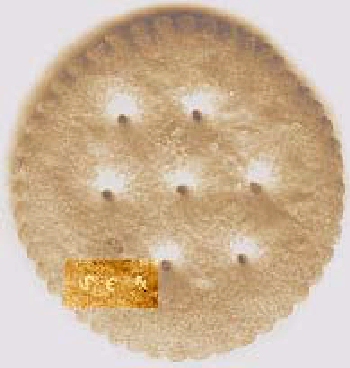
According to one of the weirdest sites I know (and only available in Italian, I'm afraid), the world is even filthier than we thought. Sexual imagery and language is everywhere. Nothing is safe. Even a humble biscuit has its own dirty little message concealed among the crumbs. What do you mean you can't read it? It says SEX! Now spit it out this minute!

The site (otherwise known as Centro Culturale San Giorgio) also does a nice line in fundamentalist homophobia. But I think it's had quite enough attention already, don't you?

The house above the cork forest (4)

Things go from bad to worse. It turns out that the land attached to the house is surrounded by common land, the boundaries of which are time-honoured but undefined. There seems to be a goat path running along the north-eastern edge and curving down to the well, which doesn't belong to the house but to anyone who wants to use it. It will pass across the area Joost plans to pave and convert into a patio. What do you mean? he says. Anyone? He can't believe it. He wants to know exactly where the lines are drawn. E. shrugs and tells me to explain that it doesn't matter, if it's common land it's as much his as anyone else's. Besides, once he's bought the house he can get the boundaries sorted out. Or ignore them. He can even buy the right to the common land. Everything can be done as soon as he's bought the house. He has to buy the house. But Joost shakes his head. He wants to know exactly where the lines are drawn.

Afternoons are spent with pots of paint, the four old men leaving strings of conflicting red blobs on stones, the trunks of trees, odd clumps of grass, like join-up-the dot drawings drawn on a giant scale. Joost looks around him with a sort of weary unbelieving desperation. Inside the house, the rain has started to coat the upper floors in mould. He's holding his little map still, now covered with pencilled lines, but nobody's interested in the map. Even the surveyor, who drew the thing, seems to regard it as an object of little value, as though it were less reliable than hearsay. He nods when Alessandro, or one of his brothers, starts to talk about a stream that's no longer there, as though its ghostly presence were still decisive. What stream? says Joost.

Joost sends me emails at the rate of five or six a week, from all over the world. Buenos Aires, Lisbon, Prague. But wherever his body is, in whichever international hotel or airport or sushi bar, his mind is on the house above the cork forest. He wants us to set up meetings with the vendors, their immediate relatives, their neighbours. He wants to know how much it would cost to have a certain kind of window shutter. He wants new maps drawn up and faxed.

He wants closure. And who can blame him?

Sunday, 18 February 2007

Cameroon, China, Cuba, Pakistan, Russia, Senegal, Sudan, Zimbabwe, etc.

Being gay is still a crime in 75 countries, and punishable by death in nine. If you're reading this blog you'll probably feel this is a bad thing and want to sign a petition for the international decriminalisation of homosexuality here. Go on. You'll be in good company. Where else does Elton John rub shoulders with Noam Chomsky? Lily Tomlin with Desmond Tutu? Martin Amis with Christopher Hitchens? (No, hang on. They've made up.)

No sign of Tom Cruise, though...


Layered dog

I just clicked on the next blog. It's in Japanese (I think) and features fish, both fried and alive, and a rather beautiful dog. I couldn't resist this photograph (actually, of two beautiful dogs). I know I have my own dog and should be posting photographs of her (and I will, Toffee, I will) but, in the meantime, let's enjoy this.

Saturday, 17 February 2007

Copernicus got it wrong...

...according to Warren Chisum, the chairman of the Texas House Appropriations Committee. He has hard evidence of, you guessed it, a Jewish conspiracy to undermine the Old Testament by inventing the absurd notion that the earth goes round the sun.

The mouthpiece of an organization called The Fair Education Foundation, Inc. (enjoy their Fixed Earth website here), Chisum has been distributing his memo to fellow legislators in an attempt to convince them that evolution and the Copernican revolution are hare-brained pie-in-the-sky faith-based hogwash. Projection?

It's rather like the Pope accusing lobbies of trying to influence the legislative process in Italy...

Strained relationships

Italian judges, particularly those in Milan, have been making themselves unpopular with the rich and powerful (read Berlusconi and his cronies/sponsors) for quite some time. But now they're taking on the big bad wolf itself: The CIA. Along with the ex-head of the Italian secret service and a netful of smaller fish, 26 CIA agents are about to be tried for their involvement in a case of 'extraordinary rendition'. They don't even have to be extradited. Italian law can try people in their absence. For more information read here.

Whatever the result, and it's unlikely that anyone will actually end up in jail, this might turn out to be as big a legal landmark as the Pinochet arrest in London. It also coincides with strong popular feeling against government plans to extend the US military base near Vicenza, as well as the irritated reaction of Massimo D'Alema, Italy's foreign minister, to a rather cheeky letter from a cabal of ambassadors (US, GB, etc.) complaining about Italy's lack of commitment to cleaning up Afghanistan.

Bush must be wishing Berlusconi hadn't lost the last election...

Friday, 16 February 2007

DICO SI... with reservations

Finally an acronym that has a sense to it. DICO (short for dichiarazione di convivenza, or 'declaration of cohabitation') looks set to replace PACS as the shorthand for civil unions in Italy.

The word's particularly appropriate because it means 'I say', and not as an expression of polite surprise. It's in-your-face enough to work in manifestos, it lends itself wonderfully to banners, as in IO DICO SI! (I say yes!). Or, even better, IO DICO NO... A CARDINALE RUINI!. (I offer this merely as a suggestion - each to his own ferret noire.)

Its very pugnacity means that it will be used
as effectively against its supporters, alas, as by them. But indifference to their use is in the nature of all arms worth respecting.

Now all we have to do is print the t-shirts. I'll be coming to the reservations later.

"And the Day After That"

Carolyn Steele Agosta has posted the first chapter of her novel "And the Day After That" here. It's entered in an American Idol style competition for fiction. If you'd like any more information about how it works, visit her site. And vote!

Shades of Alan Turing (2)

Well, he has replied, and I'm flattered.

Mr. Lambert,

Yes, the story is on the web site. As part of my computer security class, I teach different methods of encryption. My current programming assignment asks students to build a program that automatically decrypts texts written in English. You can see the statement of the problem at http://www.csee.wvu.edu/~cukic/Security. Your text is one of the seven students use to evaluate the decryption performance.

I must have downloaded your story several years ago, but I am not sure where from (it may have been NYT literary section). It is rather a coincidence that I use it for a "geeky" computer science class assignment. I hope you don't mind.

Regards,

Bojan

Thursday, 15 February 2007

Shades of Alan Turing

Imitation may be the sincerest form of flattery but unacknowledged plagiarism can leave a slightly bitter taste in the first begetter's mouth. In mine, at least. A story I wrote some years ago, called SOAP, has popped up in a number of places after being published by the online magazine East of the Web.

Generally they're student crib sites where for every 1,000 words you copy you have to provide a 1,000 words of new material. I suspect this is true of this site, which doesn't seem to open any longer, though I may be wrong. The story obviously has no value in terms of student assignment, so it's both a random and an innocuous sort of intellectual theft, and not worth bothering about.

But I'm more intrigued by this site, owned by Doctor Bojan Cukic of West Virginia University. As professor of computer science and electrical engineering, he seems to have used my story to develop some kind of code based on sequences of six letters. I've written to ask him what he's up to.

I'll let you know if he replies.

Saturday, 10 February 2007

Fasten your seatbelts...

Well, it’s better than nothing. The proposed new bill to regulate civil unions isn’t perfect, but compromise isn’t intended to produce perfection - what compromise is intended to produce is the illusion of perfectibility. The only people whose noses are seriously out of joint are the non possumus brigade, whose episcopal hissy-fitting has influenced the form of the bill (and some of its substance), but not, if the metaphor isn’t too inappropriate, induced its abortion.

It remains to be seen whether further trans-Tiber dealings will prevent the bill from becoming law. The neo-theo-dem-cons on the centre left (and God only knows what they’re doing there) can sigh with relief that the bill doesn’t institute a separate register for civil unions, alongside – and in competition with - that for married couples. But it’s unlikely that their spiritual mentors will settle for such an Italian solution.

I see a bumpy ride ahead.

Thursday, 8 February 2007

Blair yes, Zapatero no

It's odd that whenever people want to attack the idea of 'gay marriage' the stick they use to beat it with bears the smiling Bambi head of Zapatero. The fact that civil partnerships have also been introduced to England under Tony Blair is rarely, if ever, mentioned.

Maybe Blair's work in other fields, such as warmongering, has exonerated him.

Big foot, big mouth...

Berlusconi does it again. Not content with upsetting his long-suffering wife, he's managed to alienate a fair slice of the Forza Italia vote by announcing that all gays vote left.

If only this were true.

Towards the watershed...

The latest news is that a Cabinet meeting this afternoon may reach a decision on the civil union bill. Let's hope it isn't in Latin.

God's ferret strikes again

Cardinal Ruini appears to have made use of L'Avvenire, the Vatican newspaper, in his latest offensive against civil unions. An unsigned editorial (but undoubtedly the ferret's work) threatens that the kind of legal recognition of unmarried couples likely to be proposed by the government would be a "watershed that will inevitably weigh on the future of Italian politics".

The editorial declares "Non possumus", a formula apparently last used in 1860 by Pius IX to reject the unification of Italy and the usurpation of the church's authority.
If this isn't interference in the internal political affairs of a neighbouring state I don't know what is. Rosy Bindi, Minister of Families and co-drafter of the bill, said, "I don't speak Latin." Unfortunately, a lot of other people in parliament do.

In the meantime, Cardinal Poletto of Turin claims that the new law is the devil's work, announcing that "there is no doubt the devil exists." One of the ways in which he works, apparently, is to induce people to sin by means of legislation decided to "tear the family apart."

Blimey.

Tuesday, 6 February 2007

Women in wartime


If you happen to be in Amsterdam in March, don't miss this exhibition of photographs by Patrizia Casamirra. They're powerful, necessary works, moving yet unrhetorical. They deserve a wider audience.

How to become a full professor in Italy

a) Wait until the university in which you work as a lecturer invites applications for a full professorship.
b) Write a book of no academic value by throwing together work from other books and stealing material from colleagues further down the food chain.

c
) Have the book published by the university you work for, as a piece of original research, in a limited number of copies. Say, 250. Publication paid for by the university.
d) Present the book as a publication entitling you to the position.
e) Be interviewed by friends and colleagues, including those who authorised the publication.
f) Get the job.
g)
Let 247 unsold copies of the book gather dust in the office of a colleague while you stalk corridors and shout at underlings. Barone.

Monday, 5 February 2007

Bulgarian charm

Bulgaria joined the EU this year and we were lucky enough to have a Bulgarian friend (Hello, Izzy!) in our house on New Year's Eve. This meant not only that we celebrated twice (once at 11 and once at midnight, given the difference in local time), but also that we were given this Bulgarian good-luck charm. It's about the length of my forearm, made of wood and wool and is, I think, particularly intriguing because it's not just symbolic but actually, at least in part, genuinely edible. There's a chilli pepper, a ring of bread, corn, both popped and unpopped, and what seems to be a double strand of sliced dried garlic. With a packet of pasta and some oil you'd have all you need to make a plate of spaghetti aglio, olio e peperoncino.

Sunday, 4 February 2007

Legless

I've been fretting about an article I read a few days ago, written by a woman with something now known as body identity integrity disorder (BIID). This is apparently short-hand, if that isn't too loaded a term, for the overwhelming and obsessive need to amputate a healthy limb in order to feel 'whole'.

Susan Smith, the name given the woman, has already managed to 'kill' a leg and have it surgically removed, with the complicity of her husband, long-suffering as she is. I don't want to attack the woman in question, who clearly has sufficient problems of her own to address, but I'm disturbed by the conviction she holds that she has somehow been denied her right to a normal life by the medical establishment's refusal to amputate her legs for no good reason.

The arguments she uses aren't really arguments at all. She works by analogy. "A hundred years ago, it was taboo to be gay in many societies, and 50 years ago the idea of transsexuals was abhorrent to most." She might as well have said that five hundred years ago tomatoes were considered poisonous and women with third nipples were drowned as witches. What she means, of course, is that she can't have what she wants and these two categories, gays and transsexuals, can. And it isn't fair. She hates her legs and she wants them amputated and her need, no doubt sincerely felt, has been defined as a syndrome, which makes it objective and transactional in the market place of human rights, so why can't she have them cut off?

But she's optimistic:

I think BIID will stay taboo until people get together and bring it out. I have tried to make the condition more understood but it is difficult to get a case out in the open by yourself. My psychiatrist went to a meeting last year in Paris, and many doctors there told her that they had operated on people who needed an amputation under mysterious circumstances, and how happy the person was when they woke up. It led them to believe that perhaps BIID is more prevalent than people think.

And another pot


A painted one this time. A pot that looks like an egg, a seed, the head of a spermatozoon. Giuseppe did it some years ago now and I want it as the cover of a book I still haven't written. But I'll know it when I find it.

Saturday, 3 February 2007

Violent passions, horror and suspense

I've recently been discussing Paul Bowles with Brian Howell (Hello, Brian!) on Zoetrope and it sent me off to re-read a couple of his short stories in The Delicate Prey.

Hmm. I'm still not convinced by Bowles, but I love the cover of my copy, the 1956 US paperback edition, bought in Rome many years ago from a German second-hand book dealer who was later arrested for rape.

The blurb on the back of the book continues in much the same lurid vein:
HAUNTING HORROR

This is an unusual and fascinating book. It exposes the violent impulses that lurk in the hearts of primitive and ruthless men and women. In seventeen shocking stories, Paul Bowles masterfully reveals strange and twisted passions in exotic corners of the world.
Along the top runs the legend ...Good Reading for the Millions.

What's hardest to imagine now is a world in which this kind of thing wasn't tongue-in-cheek.

Pots


I've got three small ceramic pots by Christiane Perrochon that are among the loveliest things I've ever owned. They're no more than four or five inches high. In the photograph, they're standing on my study floor and I've only just noticed how the colours match. I've had them for years, don't know how much they're worth, don't care. All I know is that I'd like some more.

Love tiff at Arcore: Correction

A couple of days ago I said that Berlusconi had been caught flirting with a starlet employed by his television company, Mediaset. Whoops! What I should have said was that he'd been caught flirting with an ex-starlet employed by his television company, Mediaset, and now member of parliament employed by his own party, Forza Italia.

Same woman, different job.

Friday, 2 February 2007

The house above the cork forest (3)

It should have been so easy. Of course house-buying is more complicated in Italy than elsewhere, by which I suppose I mean northern Europe, as Joost, our Dutch friend, certainly did. But we'd been through it ourselves, twice, friends had bought houses in Fondi and Rome and Milan, it hadn't been that exhaustingly complex, just long-winded. When E. said two or three months at the most, we added one on for luck. Done deal by Christmas, we thought.

The house is flanked on one side by a place for parking cars and on the other three by unfenced land, peppered with olive and fig and pomegranate and vines that produce small strawberry-flavoured grapes with hard skins, and harder rocks heaving up through the rough grey-green grass. There's the well I mentioned earlier, round and hatted, like a relic from a stone age settlement, and a stone-built oven, and the roofless remains of what might have been a stable for a mule, also in stone. Joost and Anna wanted to know what came with the house. The owners smiled and nodded and shook their heads, worryingly not in unison. One of the brothers, the oldest, said the well was his and then said that it wasn't, and then said that it was but that he didn't want to sell it. Each time we went the putative boundaries changed.

This kept us busy for a good six months. Land register maps seemed to offer a solution until we tried to establish how they actually corresponded to the land itself. Goitrous Alessandro, the one who may have owned the well, glanced at our map upside down for a moment then brushed it away with a beatific smile and began to clamber onto the top of a rock, waving his stick towards the road below. Da qua a la, he insisted, while Joost stared hopelessly at the map and Anna gathered figs.

The neighbours, who may be related to the owners, asked us in for their home-made wine and salami, pouring the former into jam jars rinsed in a bucket, slicing the latter against a wool-clad bosom. As we drove past their barn on the way back to the road we saw the head and forelegs of a dead dog sticking out from the straw, like a trophy on a wall. It was still there two weeks later.

A blacker list

I suppose it's inevitable that, as you get older, the people you most admire should begin to die at an alarming rate. I've just been looking through some English newspapers I bought over Christmas and found The Independent's Year in Review obituary spread.

The big league names - Muriel Spark, Freddie Trueman, Robert Altman - I knew about. But it's the second division that twitches the heart. Ivor Cutler, the thinking man's Spike Milligan. Jackie Pallo, memories of Saturday afternoons spent watching my father watching wrestling, his legs dancing up and down, his hands clenched into fists, head weaving, working far harder and with more authenticity than anyone on the screen. Lynne Perrie, her gin-soaked Christian fundamentalist in Coronation Street so harrowingly awful the soap antes were definitively upped and, I suspect, her career ruined. Raymond Baxter, Tomorrow's Mr Know-all. Ian Hamilton Finlay, whose garden of words I've never seen.

And down there with the rest, in the catch-all list at the bottom of page 46, acknowledged as ever but denied the attention she deserves, as ever, there's Sybille Bedford. I wonder what she'd have done with the trial of Milosevic. Who, needless to say, like Pinochet, warrants a paragraph to himself.

Thursday, 1 February 2007

A blacklist, or should that be lavender...

Thank you so much, Love God's Way! What a helpful list this is if you feel like listening to a little gay-friendly music. There's something for everyone, from the Scissor Sisters to Barry Manilow.

Barry Manilow?

My acknowledgements to popbitch for this.

Three Stages in Learning to Fly

Read this, a short piece by Vanessa Gebbie. It's wonderful.

Love tiff at Arcore

I'm not quite convinced by this story. Berlusconi's wife has suffered in silence all these years, even putting up with her husband's insinuations that she's having an affair with Massimo Cacciari, philosopher and Mayor of Venice. Now she loses her marital rag because he's been caught flirting with a starlet (employed, not surprisingly, by Mediaset, B.'s TV empire) on a programme broadcast by, you guessed it, Mediaset.

Given that all publicity is good, this won't do Berlusconi any harm at all. It's given him a chance to talk about the value of marriage, respect for the family, etc. at a time when these issues are front page. Some of his best wife jokes are already being recycled. He's a comic, a little bit naughty, a devoted husband, a flirt. What's not to vote?

Old Mother Benedict

Seen in a restaurant in Cologne, opposite the cathedral, during World Youth Day 2005. Would that Rome were Cologne!